Buying an investment property is exciting. It’s also one of the easiest ways to lose R500,000 in a single afternoon if you skip the homework. Every experienced property investor will tell you the same thing: the deals that go wrong almost always go wrong because someone fell in love with a property before they fell in love with the numbers. At Grove Properties, we’ve helped investors build and manage portfolios across the Western Cape for over 15 years. This guide covers the due diligence checks we use ourselves, the same process we recommend to every client before they commit to a purchase. It’s not exhaustive, but if you work through these items before you sign, you’ll avoid the most common and most expensive mistakes.

STEPS

Step 1: Run the Numbers Before You View the Property

Before you even book a viewing, you need three numbers: the purchase price, the realistic monthly rental income, and the total monthly cost of ownership. If the rental income doesn’t cover the bond repayment plus levies, rates, insurance, and a maintenance allowance, the property is cash-flow negative from day one. That’s not automatically a deal-breaker (some investors accept negative cash flow for capital growth), but you need to know before you buy, not after.

A quick formula: take the annual rental income and divide by the purchase price. If the result is above 8%, the yield is strong. Between 6% and 8% is acceptable. Below 6%, you’re relying heavily on capital growth to make the investment work, which is a riskier bet.

For the Cape Town Northern Suburbs specifically, current rental yields range from 4–5% in premium areas like Durbanville (strong capital growth) to 8–10% in areas like Bellville (higher yield, slower growth). Understanding which return profile suits your goals is the first decision to make.

Step 2: Check the Title Deed and Zoning

This sounds obvious, but it catches people out more often than you’d think. Before making an offer, confirm the property is registered in the seller’s name (or the entity they claim to represent), there are no bonds registered against it that exceed the sale price, there are no caveats, servitudes, or restrictions that affect your intended use, and the zoning permits your planned use (especially important if you’re buying for short-term furnished rental or commercial conversion). Your conveyancing attorney will handle the formal title search, but it’s worth asking these questions upfront so you don’t waste time and inspection costs on a property with hidden encumbrances.

Step 3: Inspect the Physical Condition

Never rely solely on listing photos. A physical inspection should cover the roof (look for sagging, cracked tiles, waterproofing issues), plumbing (run every tap, flush every toilet, check water pressure and geyser age), electrical (check the distribution board for modern circuit breakers, not old rewirable fuses), damp and cracks (particularly in older homes, vertical cracks in walls can signal structural movement), and boundary walls and security

(fencing, electric fence, alarm system condition).

If the property is a sectional title unit, request the body corporate financial statements and minutes from the last 12 months. You want to know whether the levy is likely to increase, whether there are any special levies planned, and whether the building’s maintenance reserve fund is healthy. A low levy in a building with deferred maintenance is not a bargain — it’s a future special levy waiting to land.

Step 4: Understand the Rental Market

An investment property is only as good as the tenants it attracts. Before buying, research the rental demand in the specific area (not just the suburb. Demand can vary street by street), the typical rental price for a property of this size and type, the average vacancy period between tenants, and who the typical tenants are (families, professionals, students, corporate relocations). Grove Properties manages over 90 rental units across the Western Cape, and one of the first things we do for new investor clients is provide a rental market assessment for their target area. This includes comparable rental prices, expected vacancy rates, and an honest assessment of tenant demand. It’s the difference between buying on hope and buying on data.

Step 5: Factor in All the Costs Nobody Mentions

The purchase price is just the beginning. Before you commit, budget for transfer duty (0–8% of the purchase price depending on the value), conveyancing and bond registration fees (typically R30,000–R60,000 combined), bond initiation fee (usually around R6,000), rates clearance and compliance certificates (electrical, plumbing, beetle, gas if applicable), and furnishing costs if you plan to operate a furnished rental. A common mistake is budgeting for the bond repayment but forgetting about the ongoing costs: municipal rates, body corporate levies (if applicable), insurance, maintenance reserve (budget 1% of property value per year), property management fees (typically 7–12% of rental income), and the occasional month of vacancy between tenants.

Step 6: Get Professional Advice Before You Sign

The most expensive property advice is no advice. A property investment that looks compelling on a listing can look very different once a professional has reviewed the rental potential, inspected the building, checked the title, and stress-tested the cash flow.

At Grove Properties, our buyer representation service is designed for exactly this purpose. We work with investors to identify properties that match their financial goals, conduct thorough due diligence, negotiate on their behalf, and then manage the asset after purchase to ensure it delivers the returns projected. Because we manage our own portfolio of over 90 units, we apply the same standards to our clients’ investments as we do to our own.

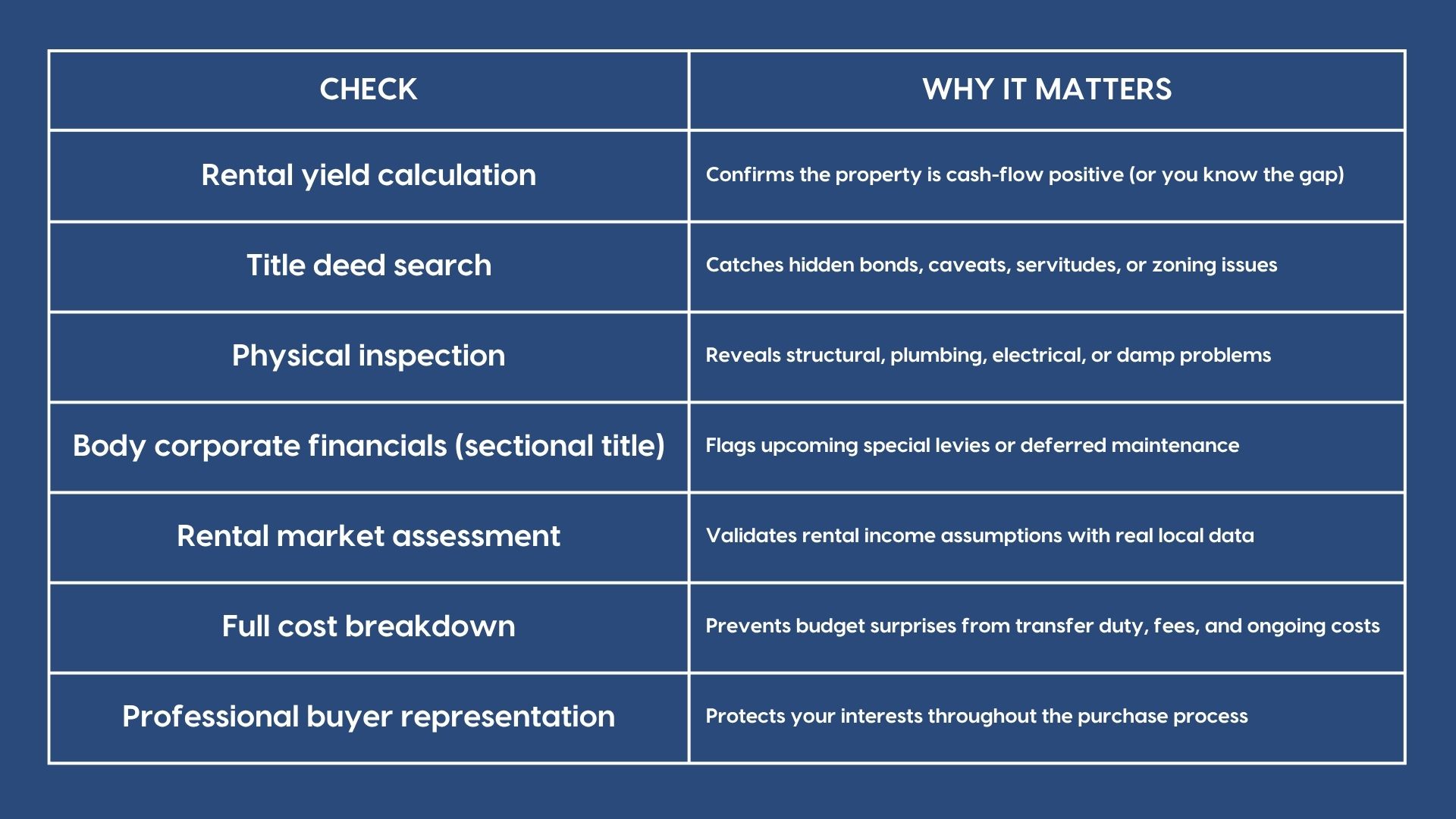
The Due Diligence Checklist at a Glance

Buying an investment property in South Africa is one of the best long-term wealth-building strategies available. But it’s only a good strategy if you buy the right property, at the right price, with the right information. Take the time to do the due diligence. Your future self will thank you.

Grove Properties offers buyer representation, rental market assessments, and full portfolio management for property investors in the Western Cape. Contact us on 066 479 8284 or

visit groveproperties.co.za to start the conversation.

Find Out More

Contact Us

Copyright © {{right_now.year}}  {{location.name}}, All rights reserved.

Our e-mail address is:
{growth@groveproperties.co.za}

Want to change how you receive these emails?
You can unsubscribe from this list.