Any tool can be used for good or bad. It's really the ethics of the artist using it." –John Knoll, co-creator of Photoshop
AI is a tool. Nothing more, nothing less. How you use it is what defines its impact, and right now, we're seeing a clear split between good and bad actors.
A recent Pew Research study found that half of Americans are more concerned than excited about AI's growth. That's not surprising when you see what's happening.
In this issue, we examine three different examples of AI in the wild, and decide whether each is good or evil. (You may not agree with me.)
I want to tell you about three things I encountered recently.
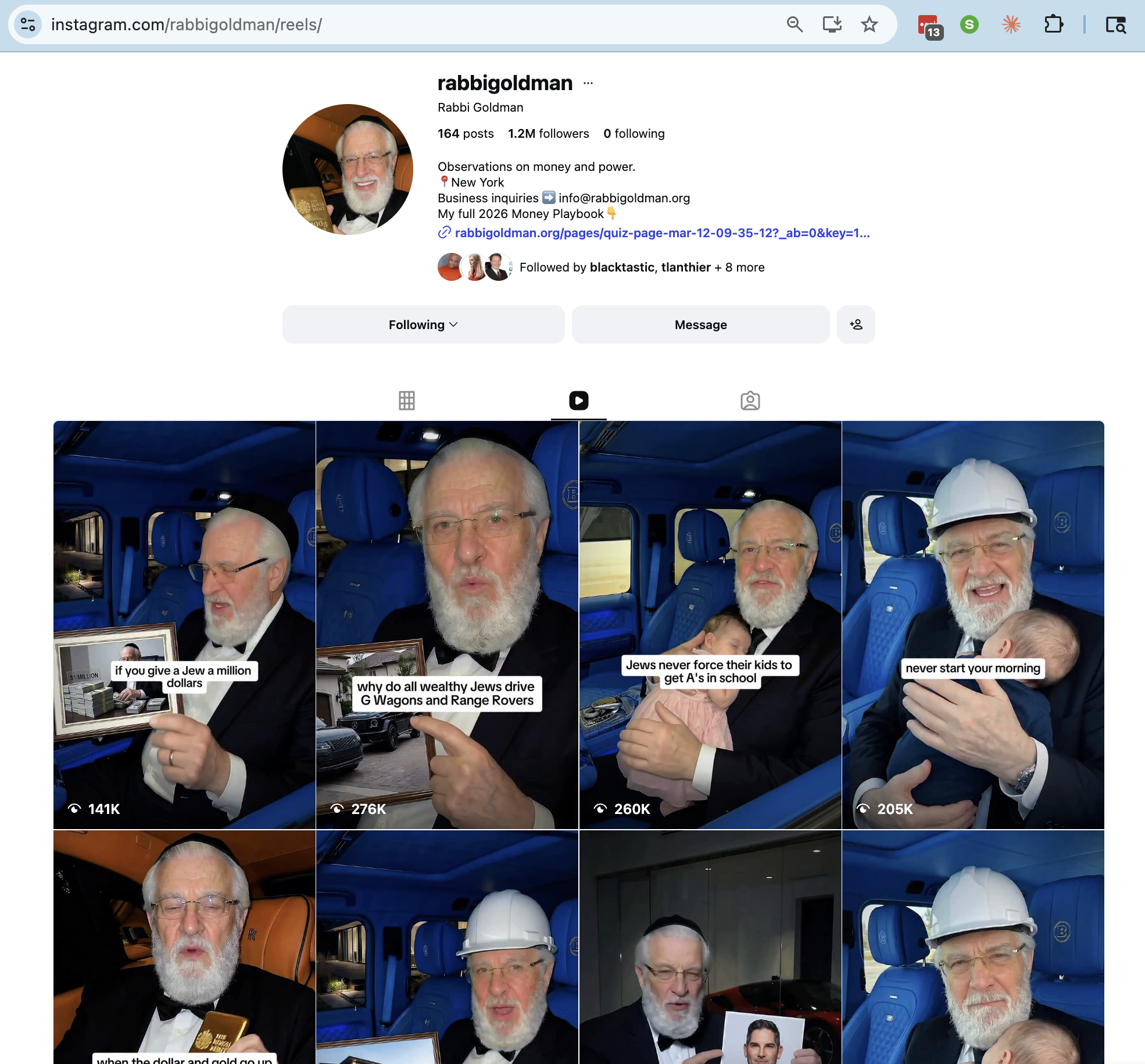
First, an AI-generated character named Rabbi Goldman gives out free financial advice on Instagram. The account exploded to over 1.2 million followers in a matter of months.
A good friend of mine had no idea it was AI. She thought it was a real person. I suspected it early on, but I still follow because I find the information useful. The value is real, even if the character isn't.
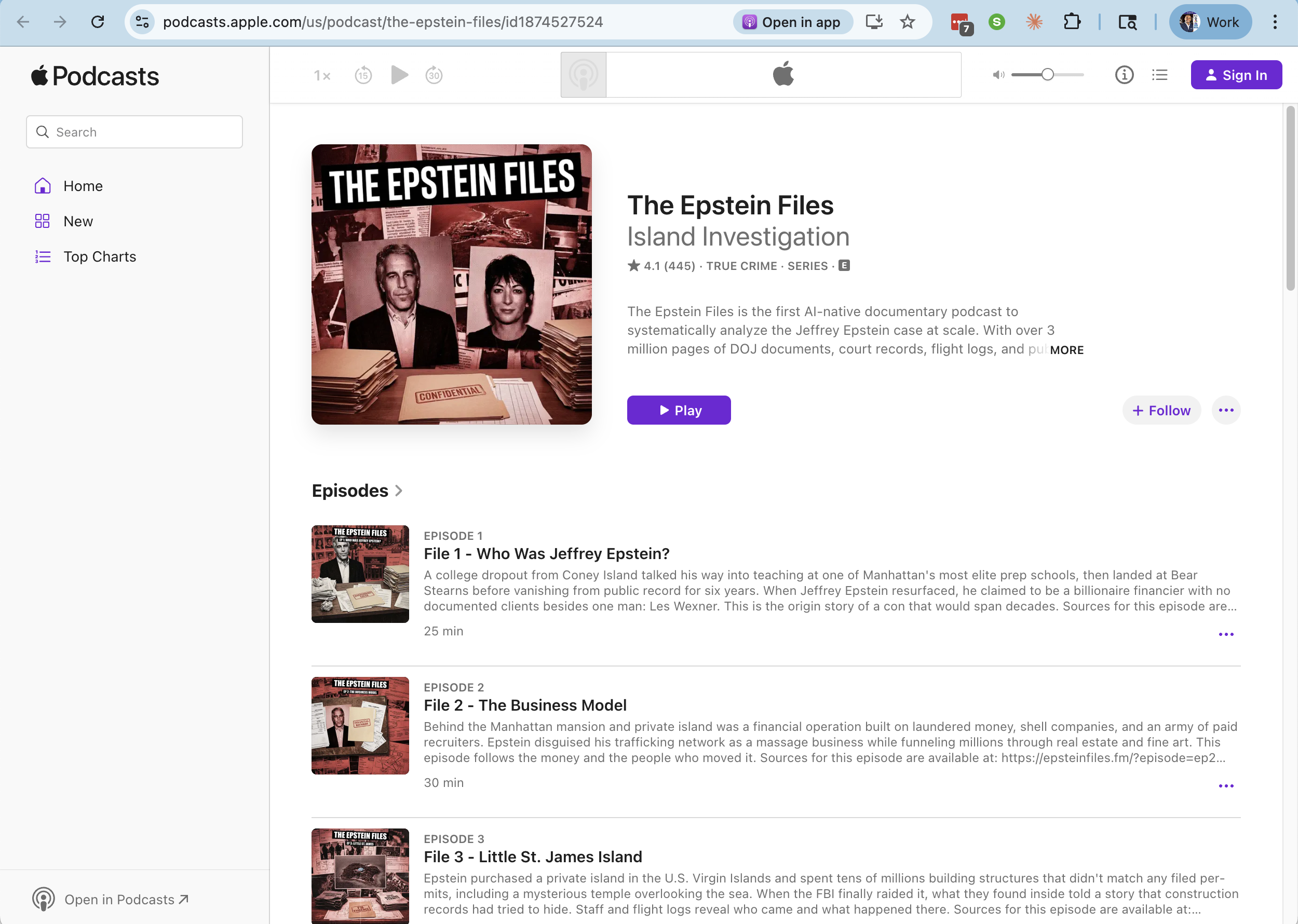
Second, an AI-generated podcast took millions of pages from the Epstein files and turned them into a factual, unbiased audio documentary.
The creator built an automated pipeline that processes over 3.5 million DOJ documents and generates episodes with zero opinion injected. It hit the top 10 on Apple Podcasts. Some people are furious about it, not because the content is bad, but because it's AI.
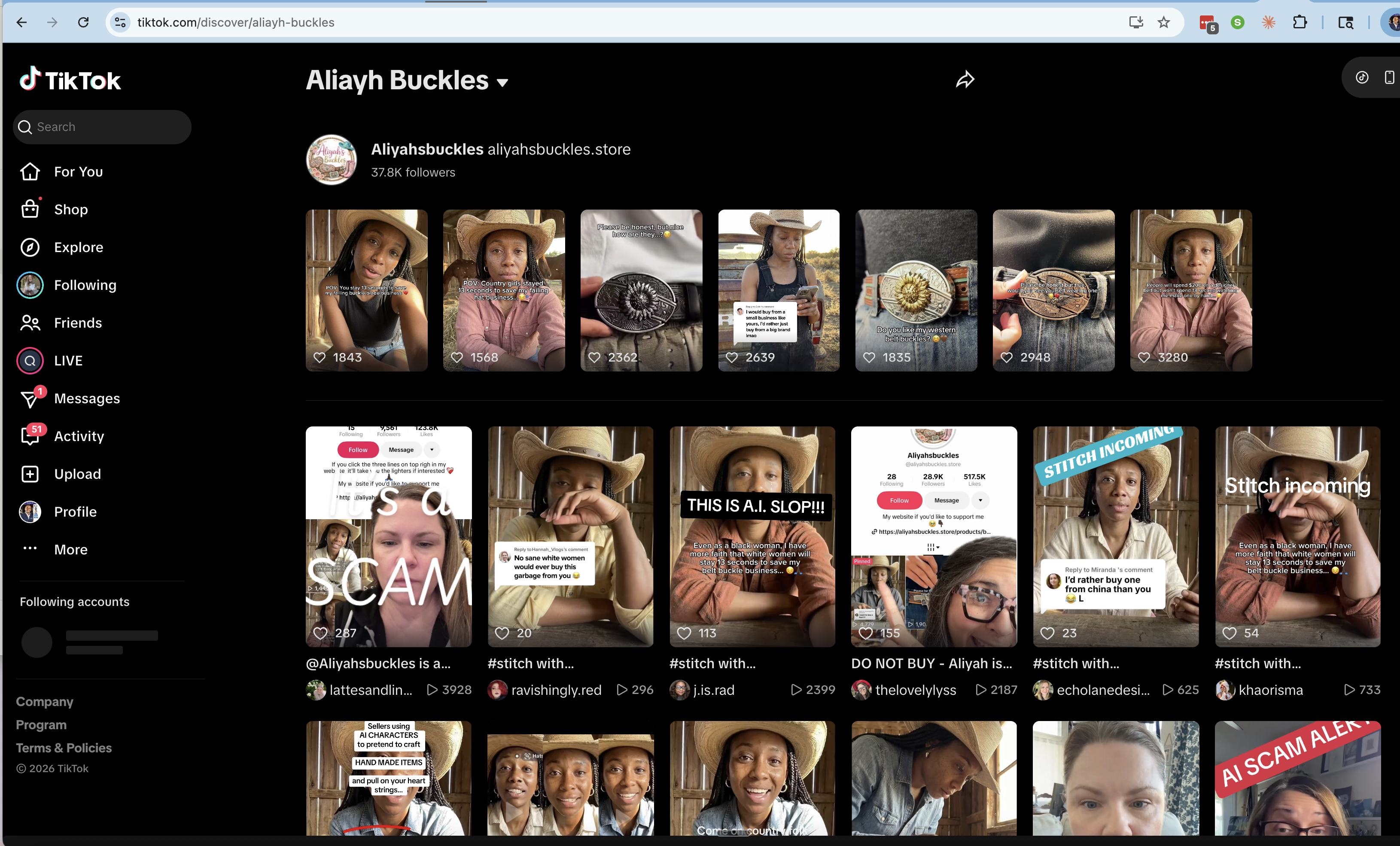
Third, an AI character named Aliyah (or Aliayh; it is spelled both ways below) pretends to be a young Black woman making custom belt buckles on TikTok.
The account seems to post fake, racially-charged comments, with tears streaming down the the woman's face, to guilt people into buying. Many allege it is a complete lie designed to exploit empathy for profit. There are several posts that point out the AI flaws and inconsistencies.
I left a comment on one of the posts asking if it was AI? My comment was deleted.
Three stories. One technology.
AI isn't the problem. Intent is.
The same tools that can educate millions can also deceive them.
Most people are worried about AI taking their jobs. I'm worried about something else. I'm worried about people using AI to be deceptive or manipulative. It's easy to generate content. It's hard to create real value. It's easy to fake a story. It's hard to build real trust.
The question you need to ask yourself isn't "should I use AI?" It's "how will I use it?" Will you use it to amplify your best, most honest work? Or will you use it to cut corners and trick people?
AI is a mirror. It reflects the person using it. Choose to be one of the good ones.
What's your assessment of the three examples I shared? Good or bad?
Here's my take:
Rabbi Goldman: Good. ✅ The intent is to provide real value, and it succeeds.
Aliayh's Buckles: Bad. ❌ The intent is to manipulate emotions and use racism for profit.
Epstein Files podcast: Good. ✅ The intent is to make dense, factual information accessible without bias. We are already drowning in biased media.
Notice the pattern?
The "good" examples are grounded in real information and provide real value.
The "bad" one is built on a fabricated identity and fake emotions designed to manipulate.
This is why I'm a huge advocate for tools that are grounded in your own sources.
Your next move is to try Google's NotebookLM. It's a free AI research assistant that you can upload your own documents, notes, and web pages to. When you ask it questions, it only uses the sources you provided to give you an answer, and it even shows you the exact citation. It can't make things up because it's not pulling from the entire internet. It's your own private, grounded AI. This is how they make the Epstein Files podcast, and you can make your own AI podcast from any source material too.
Try it here: notebooklm.google.com
Problem: You want to create video content to scale your message, but you don't have the time or desire to be in front of a camera every day. Wonder how they are making these AI avatar videos?
System: You can create a realistic AI avatar of yourself using HeyGen. This allows you to generate video from just a text script, saving you hours of recording and editing. It's a powerful way to scale your presence authentically.
Try this in 3 simple steps:
Sign up for a free account. Go to HeyGen. You can create up to 3 videos for free without a credit card.
Create your avatar. Record a short, 2–5 minute video of yourself speaking naturally with good lighting and clear audio. HeyGen will use this to create your personal "Digital Twin."
Generate a video. Type a script, and your AI avatar will deliver it on camera. You can use this for anything from social media content to training videos.
The key is transparency and intent. It gets deceitful if you pretend to be someone else, support a mission you don't believe in, or mislead your audience. It may even be in your best interest to disclose that it's an AI avatar. But as long as you're providing real, tangible value and not trying to scam people, most won't care that it's AI. They'll care about the value you're providing.
This week on King Moves (Ep. 122), Justin and I dig into the story of the AI-generated Epstein Files podcast. We talk about why I trust an AI to report on sensitive material more than I trust a human host with an agenda, and the psychology behind the backlash against it.
If this week's newsletter got you thinking about the line between good AI and bad AI, this episode goes deeper. Listen here or watch it on YouTube.
Stop playing life on hard mode. Automate your success.
Until next time,

Ethan King
A.I. Automation for Business Growth
Keynote Speaker | Author | CEO | Strategist
ethan@ethanking.com

P.S. I use AI every single day. I've used HeyGen to create video avatars for myself and for clients. But I've never used them to pretend to be someone I'm not or to fake a story to make a sale. The point of these tools isn't to replace your humanity, it's to scale what makes you authentically you.
The tools will change, but the philosophy stays the same. Use them to free up your time for the things that actually matter: your life, your purpose, your people, your freedom.
I'm wrapping up my new book about building digital employees, and preparing to get back on the road for the next leg of my multi-city speaking tour.
Hit reply and tell me: have you seen an example of "good AI" or "bad AI" this week? I'd love to hear what you're noticing.
*This newsletter may contain affiliate links. As an Amazon Associate, I earn from qualifying purchases. If you choose to purchase after clicking a link, I may receive a commission at no extra cost to you.