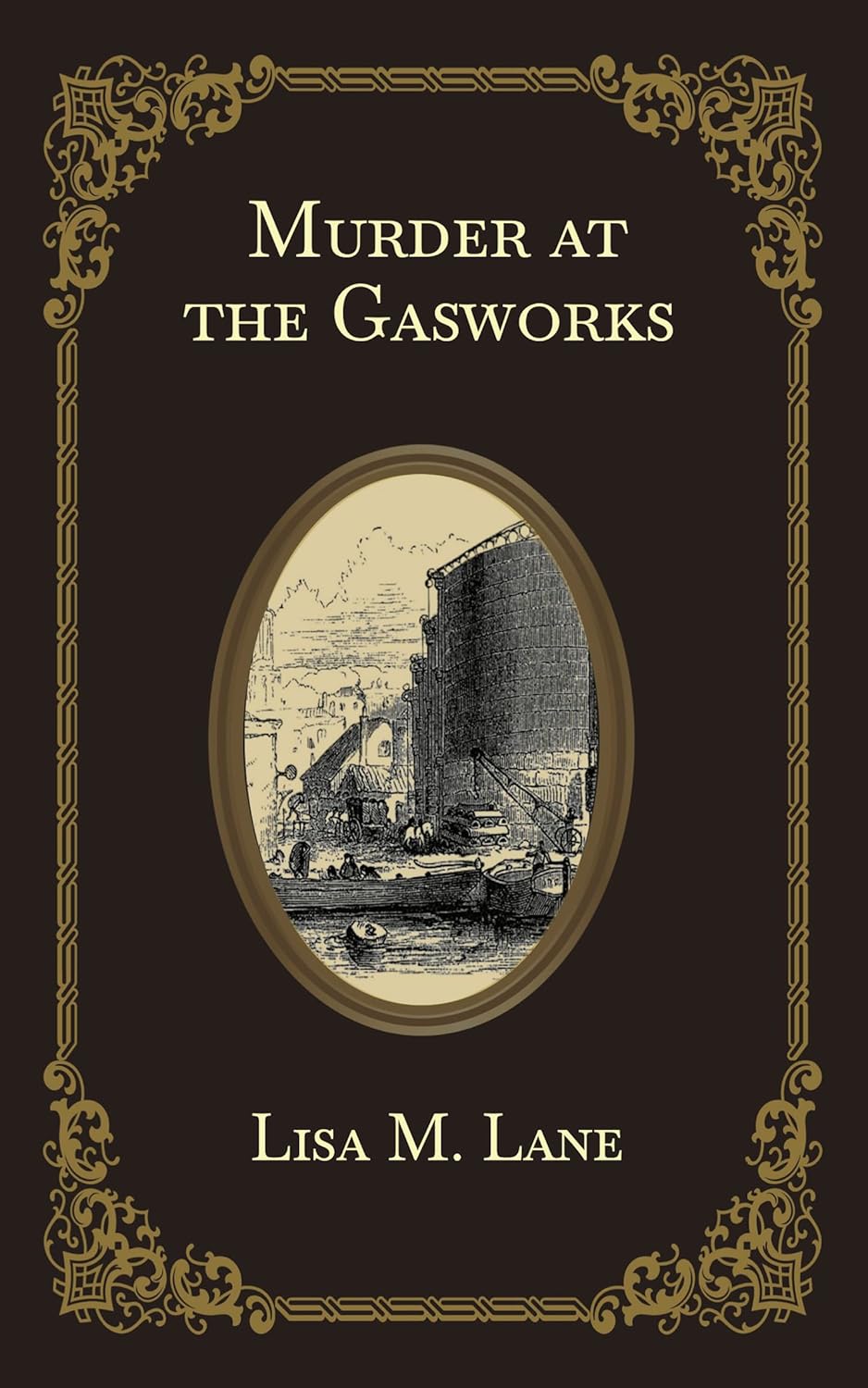
Lisa Lane’s Murder at the Gasworks is a richly atmospheric historical mystery that draws the reader deep into the grit and intrigue of Victorian England—where industry, class tension, and human ambition collide in shadowed corners.
At its heart, the novel is both a whodunit and a social portrait. The story unfolds around the death of a man connected to a gasworks—one of those hulking industrial sites that powered the 19th-century city while quietly poisoning it. Lane uses this setting to striking effect. The gasworks is not merely backdrop, but character: smoky, dangerous, and emblematic of a world in transition, where progress carries a human cost.
Reimagined as a prequel to Lane’s Tommy Jones Murder series, this novel takes on an added layer of poignancy and intrigue by introducing us to Tommy at just ten years old—sharp-eyed, curious, and already marked by the instincts that will later define him. Thrust into a world far harsher than any child should navigate, young Tommy becomes an unlikely but compelling witness to the mystery unfolding around the gasworks.
At his side is Sergeant Cuthbert Slaughter, a figure of authority whose gruff exterior masks a discerning mind and, perhaps, an unexpected tolerance for the boy’s keen observations. Their dynamic forms the emotional and investigative backbone of the story. Where Slaughter brings experience and procedural rigor, Tommy offers intuition, empathy, and a child’s ability to see what others overlook. Together, they create a partnership that feels both improbable and entirely believable within the rigid yet porous social structures of the time.