Run Toward the Roarby John Robertson of FORTLOG |
|
|
|
|
Courage Before Certainty
What you already know is probably enough to move.
The question is whether you’re willing to own what happens next.
|
Most leadership content circles the problem politely. This month I want to name it directly. A significant number of leaders already know what needs to be done. They’re just not doing it.
If I had a dollar for every time I’ve watched this play out, I’d have bought out Microsoft by now. And I don’t believe it’s a lack of intelligence or capability. |
It comes down to this: the moment you name the problem out loud, you might have to own it. Owning it means acting on it. Acting on it means risk. And let’s be honest — taking risk these days has a lot of sharp edges to it. |
Let me clear, this is a human challenge, not one I will pin only on leaders. While leaders are vital for organizational success and health, it is not something that they alone are challenged by.
Just in the past 2 weeks, I have heard this play out in a non-workplace situation. It was for a guys weekend for the groom. His two best men were tasked with planning a weekend, and the groom had even given ideas of things he would be open to doing and others that he was not interested in attending or being part of. While the wedding was approaching, these two dithered. A friend of the groom stepped in and started making a plan with some simple survey of location, activities and timing.
Long story short, he came down to the best men booking the golfing and Airbnb. Where the friends lost it? It was the perfect convergence of decision-making avoidance; rather than acting on the decisions that had been made in the absence of their leadership, nothing happened, no confirmation of anything.
This friend again stepped in and snapped when he was told that the groom was not willing to put the costs on his credit card. Is it just me or does it seem wrong in so many ways to ask the groom to provide the credit card for his weekend?
Yet this is the same theme that happens in the workplace. The people responsible to make things move forward end up dithering, so someone else steps in. Or worse, no one steps in and the effort goes nowhere. The one who is willing to honor the values, take the responsibility with the initiative and get things lined up, hands it off to the person who is responsible to check it off the list. The result? Nothing happens and the one who takes the initiative regrets not doing it on his or her own.
The irony in all of this is that these people are then accused of not being a good team player. This is the same attitude I see happen with speakers and event organizers. The speaker goes into overtime and yet people accuse the person who cuts them off as being rude. No, the one who did not honor the time schedule is the rude one, not the one who honors it – even if they have to interrupt.
The organizational process is simple. The meeting gets scheduled. The committee gets formed. The survey gets commissioned. The language gets more sophisticated. And the one phrase that stops every room cold:
“We need more information before we move on this.”
Said once, that’s wisdom. Said five times in a row, it’s something else entirely — and the professionally acceptable nature of it means nobody in the room will challenge you on it.
But your team feels it. They may not be able to name it. But every week the decision doesn’t get made, every meeting that ends the same way, the trust account [remember Relational Currency we spoke about a few months ago? See April's newsletter here] takes a quiet withdrawal. Waiting for certainty is not neutral. It sends a message.
“I need someone else to take responsibility for this.”
That is not leadering. That is hiding with excellent vocabulary.
|
Waiting for clarity can be a disguise for avoiding courage. |
There is a cultural myth worth naming: the idea that if we gather enough data, consult enough people, and run enough reports, eventually the path forward becomes so clear that this kind of values-anchored courage is no longer required.
Courage is not the reward for having enough information. It is the prerequisite for acting on what you already know.
Proverbs 15:22 is clear — “plans fail for lack of counsel.” Input matters. Advisers matter. But there is a version of that wisdom we have quietly corrupted: turning the legitimate need for counsel into an indefinite permission structure for delay.
Someone once described a committee to me as “a group of the unwilling, meeting about the unnecessary, for an indefinite amount of time.” I’ve been in those rooms.
There’s a double edge here that doesn’t get named enough. On one side, our culture glorifies self-reliance, the attitude of "figure it out, carry it yourself, and don’t show weakness." On the other side, it hands the microphone to people who weren’t in the room when the decision had to be made. Self-reliance and armchair expertise. Both keep people and leaders frozen.
Fear of judgment. Fear of being wrong. The need to appear competent. The social media version of leadership where everyone projects the clean win. These are not character flaws — they are real pressures. But they are also the reason good leaders sit on decisions they already know need to be made. |
Hindsight isn’t 20/20. It’s a curated story — one that edits out the fog, the fear, and the incomplete information that were all present in the moment. The danger is believing that same clarity is available now, if you just wait a little longer. |
It isn’t. We all should know that leading is not for the faint of heart, for those who prefer safety. You don’t lead from a lookout tower. You lead in the fog. And just as a tea bag doesn’t choose what it releases into hot water [what has been steeping is what leaks out], character is what surfaces when things are neither clear nor straight ahead. So it is with leadering — when things are not perfectly clear and straight ahead, what’s inside always leaks out.
The critical moments in your organization are going to surface what’s real regardless. Pressure always does. The question is not whether the hot water is coming; it is whether what leaks out when it arrives is worth following. |
That is not a question about your strategy, your resources, or your timeline. It is a question about who you are becoming right now, in the ordinary moments before the critical moments arrive. |
Most leaders reading this already know which decision has been sitting on the table too long. That knowledge, that quiet certainty about what needs to happen, is not a problem to solve. It is a call to be the shepherd-guide your people need you to be. To be that Value-ABLE leader that people can trust, respect and follow even if they may not always like us.
Be the leader your team is waiting for. Waiting for Clarity Can Be a Disguise for Avoiding Courage
What are you waiting for? If you need someone in your huddle, lets talk?
John Robertson |
|
|
Dive Deeper
|
|
|
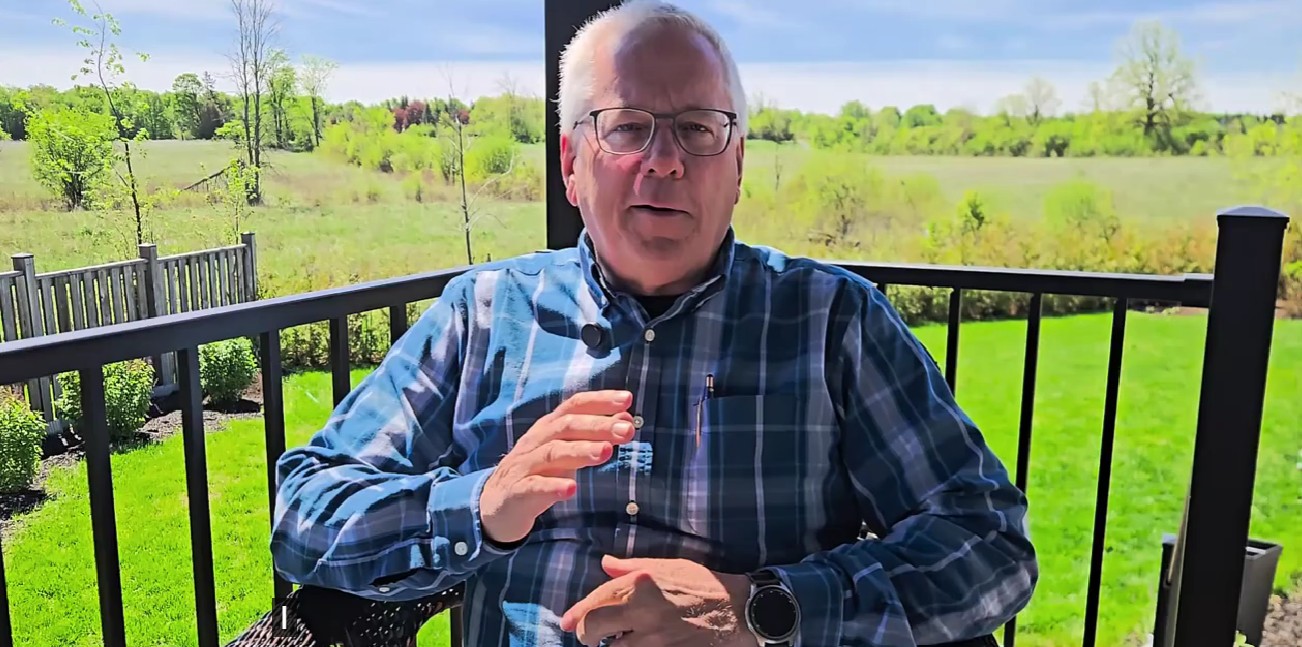
This month’s Johnism video goes deeper into the patterns, the stories, and what it means for character to be the decisive variable when certainty isn’t available. Watch it if the topic is live for you. Or go straight to the tool below. Either works. |
|
|
|
|
Are You or Someone You Know Looking for a Speaker?
|
I'm currently booking speaking and consulting dates for the fall and winter. I speak on critical moments like crisis, growth, and change, where navigating leadership and team culture are not optional or delayable decisions. Let's connect about how I could serve your event or team? |
|
|
|
|
A Next Step Resource For You
|
Below is a two-sided tool. You don’t need the video to use it, just a few honest minutes and a small group of peers who are actually in the game. And I mean that specifically: people who are carrying real responsibility right now, not people who talk a good game from the stands.
Side 1 is a personal check-in. Four questions built around the control / no-control grid from Stephen Covey’s model, utilizing the VERI quadrant and Johari window. You’ll know which category lands hardest. That’s the one worth sitting with before the group meets.
Side 2 is the Huddle Card — a structured peer conversation in three moves: Open, Dig, Commit. The goal is not a great discussion. The goal is one action, before you meet again, witnessed by the people around the table.
|
|
|
|
|
Want Help Building Your Huddle?
|
A huddle is not a mastermind group. Not a therapy session. Not another meeting.
It is three to five peers who carry real responsibility — people in the game, not in the stands — meeting regularly with one purpose: to help each other move forward.
If you’ve been thinking about starting one, or if you lead a team that needs this kind of peer accountability built into their rhythm, reach out to hello@fortlog.co and let’s talk about what that looks like for your context. I can help you design and launch it. |
|
|