Run Toward the Roarby John Robertson of FORTLOG |
|
|
|
|
RELATIONAL CURRENCY (RC):
The Balance Sheet of Culture
Right now, most workplaces talk about trust, leadership, communication a lot in values statements, leadership frameworks, and engagement surveys. Yet, in day-to-day reality, trust rarely behaves like a policy you can implement or a metric you can check off on some list. It functions more like a living currency: constantly being earned, spent, debited, and replenished through ordinary interactions.
Walk into any workplace long enough and you can feel the culture. Not the words on the wall, but the atmosphere in the room. Are people open or guarded? Willing to speak or careful and quiet? Curious or cautious? Many try to “improve culture” with initiatives, conversations, or new programs. Those can help. But culture doesn’t change primarily through announcements.
It changes through accumulation.
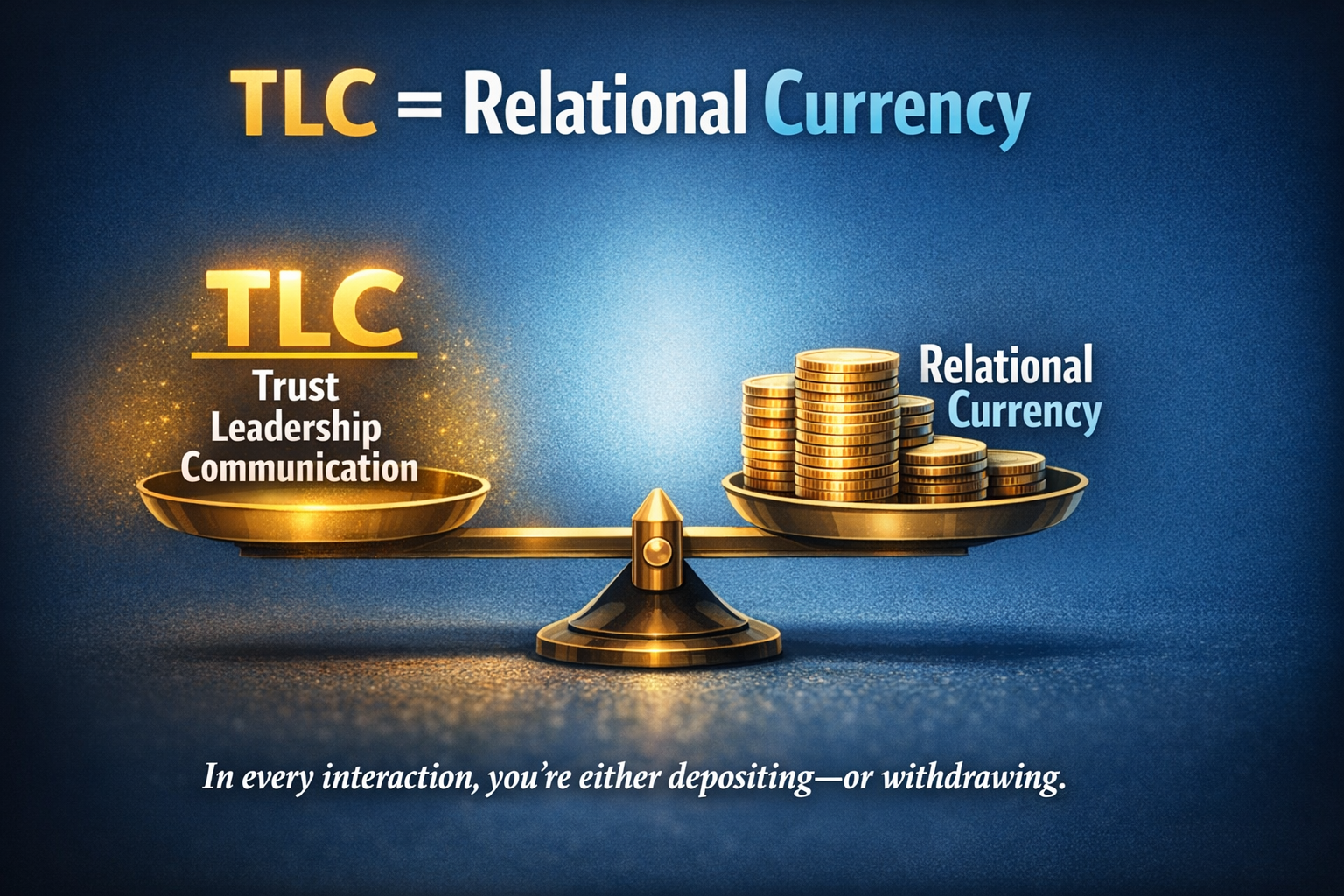
Here’s the lens for April: Culture is the balance sheet of your relational currency.
Every interaction is a transaction. Over time, those transactions build a relational balance — and culture reflects that balance.
Repeated deposits create trust surplus → healthy, open culture. Repeated withdrawals create trust debt → fragile, cautious culture.
Spring is about becoming more intentional with those transactions.
I am not sure if you ever had the experience, as child or as an adult, where the teams were being chosen and you were the person people wanted on your team? Or if you were ever the person that one team would offer to the other team? [It’s not a great experience, trust me]
The best way to describe this is in a different scenario. We walk into an organization, like a workplace, church, school, or sports team, and three things immediately start to emerge.
First, we feel more like we are sitting in on a family reunion then we are being welcomed. The second thing that happens is they all seem to speak a language, that they each understand, but you & I have no idea what they are referencing. In a tragic irony, they are speaking English but not in a way that we understand. Their lingo is insider lingo. Then, when you and I ask questions, static gets generated immediately or, more often, a polite response we are told is ‘That’s how we do things here. You will have to hang around for a while until you understand.’
The funny part is that they ask each other how welcoming they are and not the new person. The result is the new person resigns, even if they don’t immediately leave.
Here’s the truth we often miss: Culture is the balance sheet of your relational currency.
|
|
|
Every conversation, every decision, every moment of presence (or absence) is either a relational deposit or withdrawal, whether we intend it or not. Over time, these small moments [for better or for worse] compound as credits or debits.
And here’s the tension so many leaders feel but don’t always name: we invest heavily in systems, strategies, and programs. Yet unknowingly, we may be overdrawing our relational accounts through dismissiveness, inconsistency, or misalignment between what we say and what we do. We can have brilliant plans and still be low on trust. Isn’t this the challenge with great plans? The action and follow-through evaporates like water on hot asphalt.
Spring is an invitation to gently shift this dynamic, not through grand initiatives, but through intentional, human, and consistent leadership.
The goal is to increase your personal Relational Currency by one consistent trust-building behavior. Not ten new habits. Not a cultural overhaul. Just one deliberate way you will show up differently. As one person said, ‘listen with your eyes too.’
Whether this is expressed as more consistency, more intentionality, and/or investing more in ways that matter to the other person [relationally]. Clarity here matters. Trust changes one conversation at a time. Things shift through repetition, not intensity. It is seldom achieved through big strategies or plans, but humans BEING real with one another. It is the same as communication and respect, the little things that are the big things!
Before you choose what to do, anchor in who you are becoming. Or to be more accurate, be the person that people can trust, respect and follow. Why is this something you want to do, why does this matter for you? These are your real values. Hold this identity close:
“I AM a leader who builds trust through consistency, not charisma.”
This is a powerful distinction. Charisma can impress. Consistency builds safety. And safety is the soil where trust grows. Trust enables contribution and people want to contribute. Charisma may impress people in the moment. Consistency builds the environment people trust over time. Let this identity guide our decisions, especially in small, ordinary moments that often feel insignificant, yet they are the deciding factors when critical moments appear.
The goal is Practise not Perfection
Choose one practice for the spring, just one, and commit to it imperfectly but faithfully. If you want to raise the bar [and grow the authenticity people are always talking about], name it with people and share that this is something you want to work on. That will separate truth from fiction.
Ask one more question before stating your position. Follow through on one small promise every week. If you have a memory like most humans, put it in your calendar as a reminder. Appreciation is the language everyone understands, when it is genuine and sincere. Acknowledge someone’s contribution in the moment, not just plan to follow up with them. Close every meeting with a clear next step we will own and actually deliver.
These are not flashy leadership moves. They are quiet, trustworthy ones. Over time, they shape how people experience you, which also means how the culture is experienced.
Notice, too, your everyday interactions. Throughout this season, let's you and I simply ask ourselves:
Was that a deposit, neutral, or debit? Awareness alone begins to shift behavior. Journal what went well, and what needs to be worked on.
|
Relationship Management
|
There is another reality that you and I cannot pretend is not true. While it should only be our desire and intention to strengthen relational currency, there are those that frequently debit the account. Whether it's intentional or not is not relevant. The fact is that you and I get painted with the same brush if we are not clear on how our interactions are perceived by others. Changing analogies, these currency types will drain our battery so that we do not even have the energy to invest in the positive ones. We must be willing to management these relationships so that we strengthen and create credit in our relational currency 'accounts.' |
Finish StrongerAt the end of the month, take a few minutes to reflect - not as a performance review, but as a learning moment:
Where did my behaviour align with my stated values? Where did I unintentionally withdraw trust? What will I repeat or adjust next month?
No shame. No harsh judgment. Just honest, grounded thinking. Raising the bar is not a problem when we know where we are starting from. Without e-value-ating, it will just be our thoughts and feelings and not an honest appraisal. Try asking a few core people, but not everyone, whether they are seeing the same things.
A closing thought for April
|
Strong Relational Currency is not built primarily through bold initiatives or perfect strategies. They are built through thousands of small, trustworthy moments. Those moments where leaders choose, I AM over I HAVE relationships instead of egos/titles/positions, consistency over convenience, and presence over performance.
Relational Currency compounds over time. And this spring, you get to be a quiet, steady architect of this. You don’t wave a magic wand to hatch positive relational currency.
You invest in it. It is the same principle as compounding interest. The relationships and environment your team experiences next month is the interest earned on the relational transactions you make this one.
What kind of balance sheet are you building?
|
|
|
A Practical Resource for YouAre you curious about the current health of your organization? Here's a free survey to help you determine where you are and give you some next steps to help you and your team thrive. |
|
|
|
|
Dive DeeperA key aspect to building trust and a healthy organizational culture is listening. But listening alone isn't enough. It all depends on how we listen. This video clip from a keynote speech shares more about how to listen well, along with a practical example to apply in the workplace. |
|