|
|
IUBAC/IMI Tile Apprentices Shine at International Contest
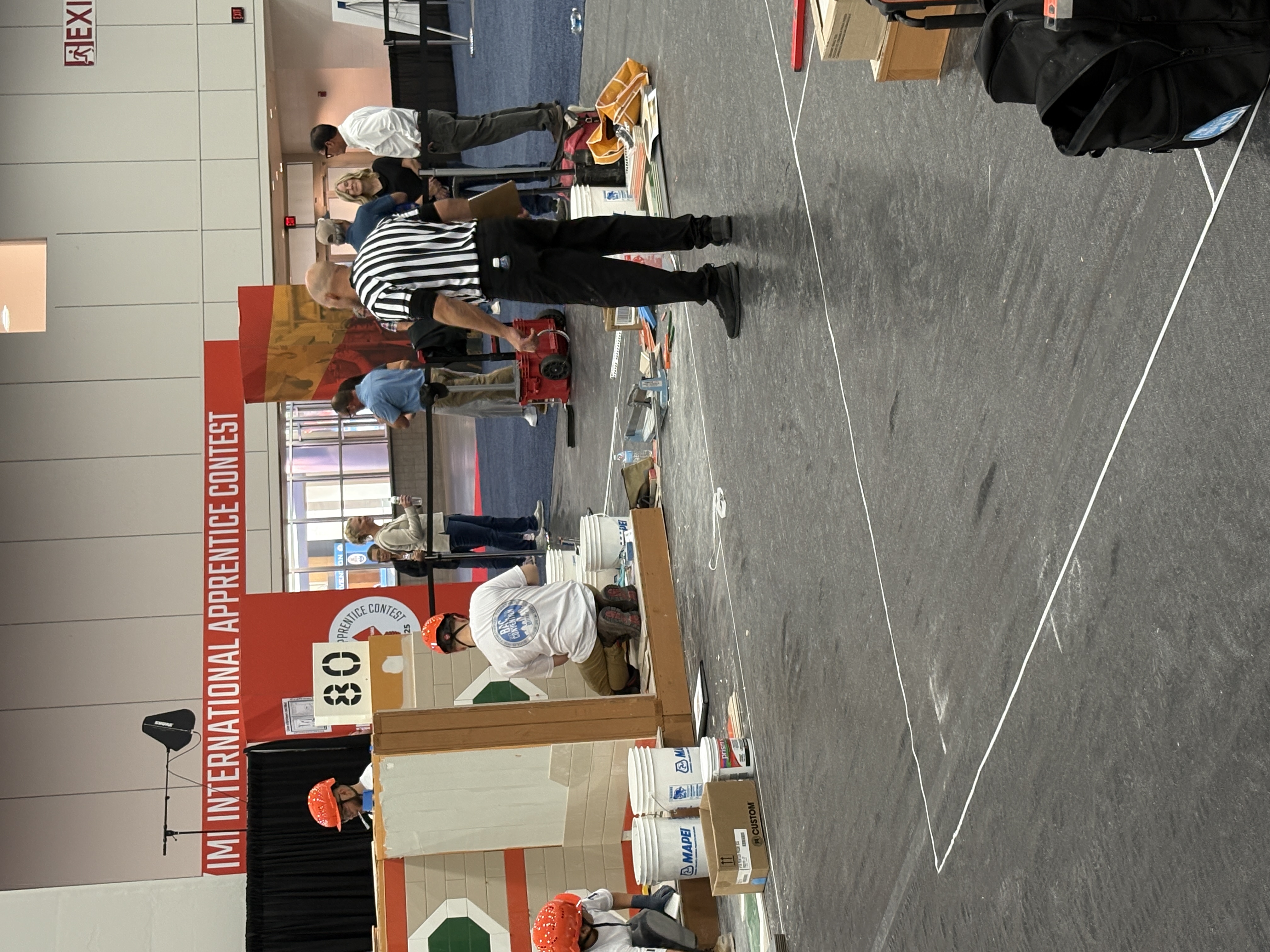
The next generation of skilled tile setters took center stage in Detroit this September during the BAC/IMI International Apprentice Contest, the largest event of its kind hosted by the International Masonry Institute. Apprentices from across the United States and Canada—representing the top 1% of IUBAC training programs—competed in real-world challenges judged on layout, craftsmanship, safety, and aesthetics.
TCAA proudly celebrates this year’s tile champions: 1st Place – Mariusz Sarat (ADC 1 of Illinois) 2nd Place – Neil Hough (ADC 1 of Illinois) 3rd Place – Randall Williams (Local 1 PA-DE) Their success highlights the strength of union apprenticeship programs that build both skill and professionalism while providing a debt-free path to rewarding careers. As Kevin Trevisan of Roman Mosaic noted, “The future of the tile industry is in good hands.” |
|
|
|
|
|
|
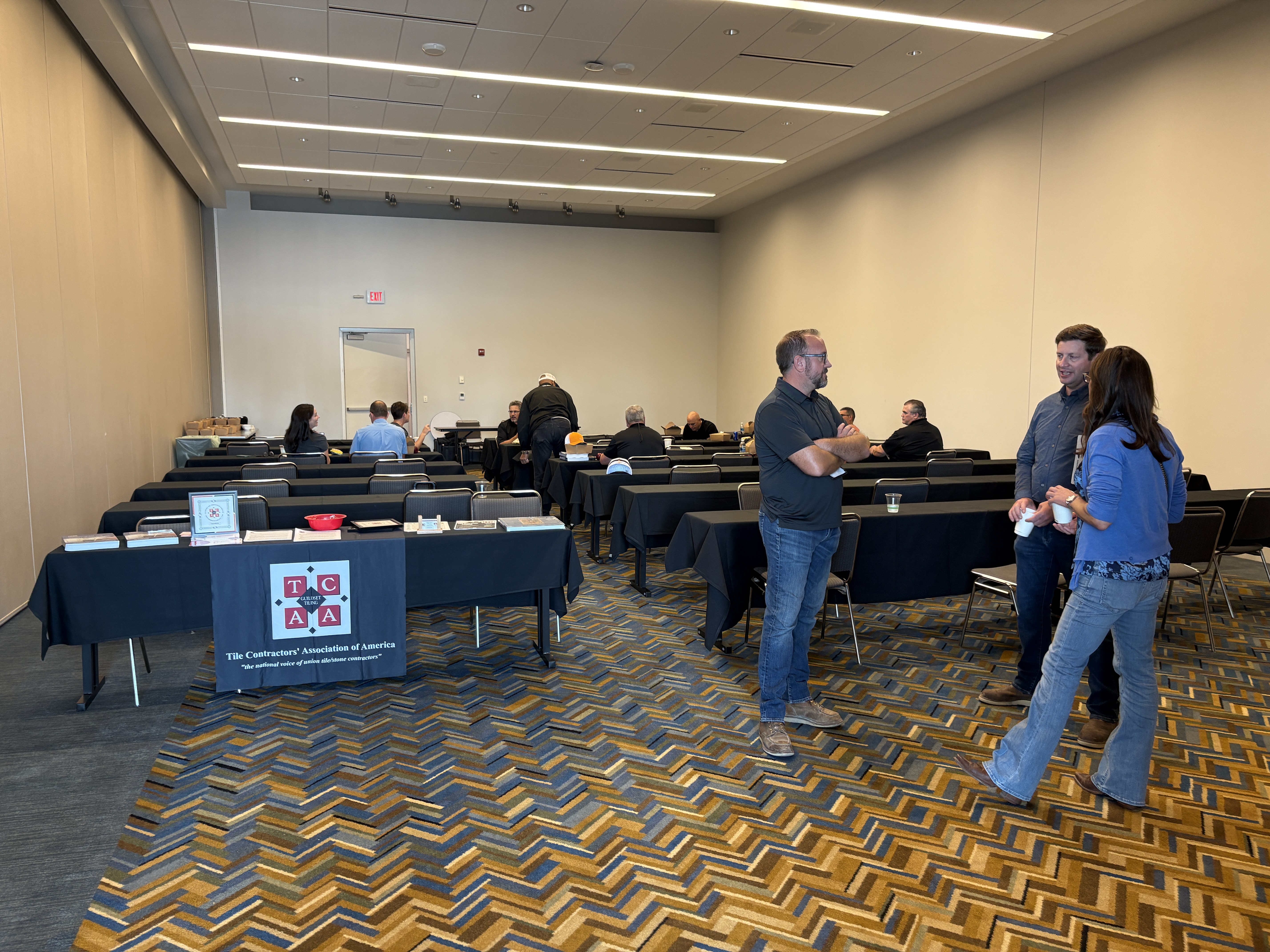
IMI & TCAA Team Up for Modern Tile Finishes Seminar: Designing & Detailing for Project Success: November 4, 2025 The International Masonry Institute (IMI) and the Tile Contractors Association of America (TCAA) are partnering to host an educational seminar, Modern Tile Finishes: Designing & Detailing for Project Success, on Tuesday, November 4, 2025, at the Independence Visitor Center in Philadelphia, PA. This program, designed for architects, interior designers, and contractors, will review best practices for tile assemblies in commercial spaces, including design and installation options, industry standards, and real-world case studies. Attendees will also have the opportunity to earn 2 - AIA LU/HSW continuing education credits. Highlights include Scott Conwell’s presentation on The Materiality of Tile and a panel discussion featuring project team members Britni Lettsome, Joe Battaglia and a representative from Mosaic and Tile who recently completed a tile retrofit of the Visitor Center itself. Planning for this event has been a true collaboration between TCAA and IMI, with a focus on creating a meaningful regional program for members. With a capped attendance of 60 participants, the seminar promises to be an engaging and intimate opportunity for industry professionals to network, learn, and discuss innovative approaches to tile design and installation. |
|
|
|
|
Asher Adams – Where the Past & Present Collide
|
|
|
Asher Adams, an Autograph Collection hotel in Salt Lake City, UT. Photo provided by Asher Adams.. Connections help us to make sense of life and our place in the world. We connect with our family, friends, colleagues, and even strangers. Connections aren’t limited to personal interactions; they can be found all around us. For example, understanding and maintaining elements of our history as we progress helps provide context and continuity. The practice of adaptive reuse in the architectural community is an excellent example. “Adaptive reuse is the process where existing buildings are reused in a different capacity to their original purpose. Buildings that undergo this process are usually at the end of their lifespan. Reusing them allows elements of their appearance, design, cultural heritage and historic significance to be maintained, while serving a new function and preventing them from being demolished in processes that consume a significant amount of energy.”[1] [1] Source: University College of Estate Management, United Kingdom The Union Pacific Depot is Transformed into the Asher Adams Hotel The Asher Adams Autograph Collection hotel is an adaptive reuse of a historic railway station. It connects past to present, people to the city, and to each other. The Union Pacific Depot in Salt Lake City was built in the early 1900s to connect the San Pedro, Los Angeles, Salt Lake, and Oregon Short Line railways to a central location. This enabled passengers to travel directly from Salt Lake City to southern California, rather than connect via Sacramento. The station went out of use in 1986, and Union Pacific donated it to the State of Utah in 1989. The state sold it to the Boyer Company in 1999 and it was subsequently used as an event center and featured various stores. It was added to the National Register of Historic Places in 1975. The adaptive reuse of the Union Pacific Depot was conceived in 2018 by The Athens Group. The project was a collaboration between The Athens Group (developer), HKS (architect), Okland Construction (general contractor), Metro Surfaces (tile installer), and others. Asher Adams combines construction of a new tower, including 212 rooms, and the renovation of the existing station to create 13 rooms. Construction began in 2022, and the hotel opened in November 2024. The Asher Adams hotel pays homage to the history of the Union Pacific Depot in many ways. It is named after John R. Asher and George H. Adams, two cartographers from the 1800s that were known for creating high-quality maps that included railroads in painstaking detail. The original depot houses the lobby, restaurants, and meeting spaces. The Grand Hall lobby preserves striking murals, arched windows, stained glass and other features. The layout of seating, front desk, and bar evokes the look and feel of the railway station as well. The restaurants and bars are all inspired by rail cars, maintaining the theme throughout the depot. |
|
|
The Asher Adams Hotel’s beautiful Historic Depot. Photo Provided by BILD Photography. |
|
|
Asher Adams’s Historic Depot including the train station’s original mosaic tile. Photo Provided by BILD Photography. |
Much like the original Union Pacific Depot, Asher Adams is a hub within downtown Salt Lake City itself. It sits in the heart of the various attractions from the Delta Center (home of the NBA’s Utah Jazz and the NHL’s Utah Hockey Club), Abravanel Hall (home of the Utah Symphony and art event center), the Utah Museum of Contemporary Art, City Creek retail center, and the Church of Jesus Christ of Latter-day Saints Temple Square. Asher Adams provides a luxury lodging experience for travelers that connects them to the past while embracing what Salt Lake City has to offer today. |
|
|
The second-floor bar at Asher Adams featuring Schluter Matte Black JOLLY profiles on wall corners and edges. Photos Provided by BILD Photography. |
|
|
Rouser Restaurant at Asher Adams featuring Schluter QUADEC profiles in matte white. Photos provided by BILD photography. |
How did Schluter Systems Support the Project? During initial project conversations, Scott Schilling, Schluter Systems Regional Commercial Manager, learned of a keen interest in the Schluter Shower System. The Schluter Shower System was a single-source, cost-effective, and flexible alternative to the products specified on the project, which included waterproofing elements from multiple manufacturers. Schluter Systems was able to provide an integrated solution including the Schluter®-KERDI bonded waterproofing membrane and Schluter®-KERDI-DRAIN. Schilling communicated to HKS and Okland Construction that the system would adapt to the existing conditions and help them maintain the aggressive schedule. Chris Hill, Schluter Systems Territory Manager in the greater Salt Lake area, showcased the system flexibility and helped ensure the installation teams were trained on the proper installation through multiple site visits. Andy Kulik, Project Manager for Metro Tile, said the system was easy to install, reliable, and increased productivity. Metro Surfaces employed a systematic approach to the project that ensured speed would not be at the expense of quality. This was essential given the scope (225 rooms) and timeline. They used separate crews for the waterproofing and tile setting, water tested each shower and supplied the waterproofing products in kits for each unit. Matt Cederholm, Project Manager on behalf of Okland Construction for Asher Adams, echoed Andy Kulik’s perspective that using the Schluter Shower System minimized risk – one contact, one system, one warranty. He also shared that the flexibility of the system to accommodate various drain locations was a significant contributor to the success of the project. The original specifications called for a preformed shower pan that couldn’t be modified and therefore would have required drains to be placed in untenable positions. For example, the renovation work in the station itself required navigating existing conditions including structural beams running underneath the shower locations and the radial nature of the new building. The Schluter®-KERDI-DRAIN adaptor kits were also key to connecting the bonded waterproofing system to the previously installed clamping ring drains. Since the adaptors kits allowed the previous clamping drains to remain in place, the team was able to bypass expensive tear-outs and increase the speed of the project completion. Finally, the installer sourced custom foam trays to provide the slope, shower-specific drain locations, and support underneath the waterproofing system. |
|
|
The Historic Suite at Asher Adam’s featuring the Schluter®-Shower System behind the tile. Schluter-KERDI-DRAIN with a Classic Gold grate in FLORAL design. Photos Provided by BILD Photography. Schluter Systems also contributed design elements to the tiled showers that complement the overall aesthetic. In the historic rooms, a brushed gold finish was selected for the drain grates to match the plumbing fixtures, mirrors, and drawer pulls. Similarly, a brushed brass finish was selected for the drain grates in the new tower rooms, while a matte black finish was chosen for the Schluter®-QUADEC profiles used on the outside corners of the curb to blend into the surrounding tiles. The ability to finish and protect tile edges in a way that suits the design makes the application and installation much easier for the tile contractor. |
|
|
The New Tower Suite at Asher Adam’s featuring the Schluter®-Shower System behind the tile. Schluter®-KERDI-DRAIN with an Anodized Aluminum Brushed Brass grate in Contour design and adaptor kit. Photos provided by BILD photography. Something Old, Something New Schluter Systems is grateful to have contributed to the success of such an interesting project from a functional and design perspective. Schilling and Hill were honored to support the adaptive reuse, each finding it one of their most exciting and successful projects. Everyone we spoke to expressed similar sentiments, particularly being able to create something new and valuable to the city that maintains the history and beauty of the original structure. In a time when so many things are designed for obsolescence and disposable, it’s exciting to see a project with the goal of building on history and creating something new and long-lasting that connects people to the past and each other. |
|
|
Pictured in the Asher Adams (left to right): Ryan Dode (Director of Architectural Sales, Schluter Systems), Sean Carse (Regional Manager, Schluter Systems), Andy Kulik (Project Manager, Metro Surfaces), Scott Schilling (Commercial Manager, Schluter Systems), Dee Degooyer (Chief Sales Officer, Schluter Systems), and Chris Hill (Territory Manager, Schluter Systems). Written by Sean Gerolimatos Director of Research and Development at Schluter Systems |
|
|
|
|
|
|