MEDICAL MINUTE
You Are What You Think: How the Brain Turns Thoughts Into Reality
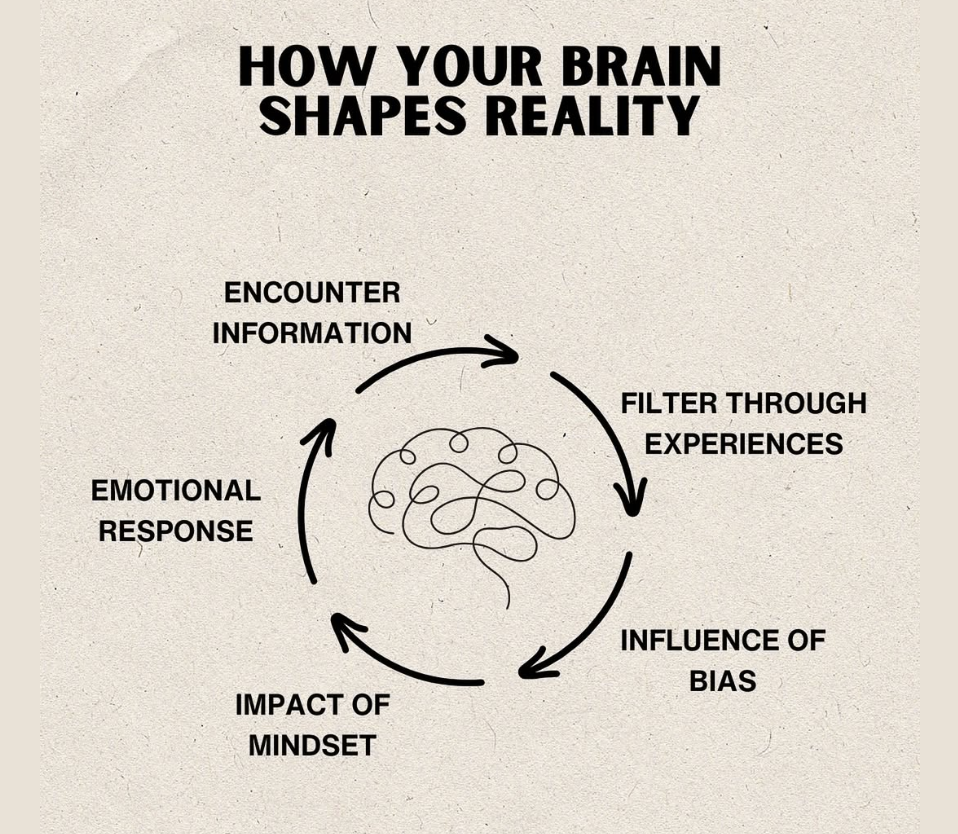
A growing body of neuroscience contends that the brain uses overlapping, though not identical, neural systems for both imagining and experiencing. This means that thoughts can produce measurable biological and hormonal responses.
You’ve likely experienced it yourself – salivating at the thought of a favorite food, or overcome with emotion remembering an important event in your past. Research shows that vividly imagining pain or recalling emotions like fear or sadness activates many of the same brain regions as real experience. The effect is strongest when thoughts are vivid, personal, and emotionally charged.
Most of the time, the brain can distinguish between imagination and reality. But that system can break down when a person is distressed. In conditions like post-traumatic stress disorder (PTSD), intrusive memories are re-experienced, with the brain misclassifying memories as present reality.
Even in everyday life, worry and rumination reflect a milder version of this same process: the brain’s simulations becoming convincing enough to shape our reality.
How to harness the system to your advantage
You don’t need to eliminate these mental simulations. In fact, you can’t. The brain is always generating them. But you can influence what it rehearses and how your body responds.
Strategy #1: Direct your attention
Practices like mindfulness and meditation help you notice where your thoughts are going and gently redirect them. Over time, mindfulness appears to dampen activity in the brain’s threat-detection systems, making it less likely that a passing worry will trigger a full emotional and physical response.
Strategy #2: Use visualization intentionally
Athletes have long used visualization to rehearse performance, engaging the same neural circuits involved in actual movement and execution. For a non-athlete, this can be as simple as mentally walking through an upcoming conversation or stressful situation while picturing yourself staying composed and responding effectively.
Vivid, emotionally grounded visualization – especially imagining yourself handling a challenge effectively – can help prime the brain and body for real-world performance.
Strategy #3: Curate your mental inputs
Scrolling social media or reading online news can function both as stressors and coping mechanisms, depending on how they’re used.
But emotionally charged content is particularly likely to amplify stress responses. To offset this, limit news or social media to specific times, rather than grazing all day or scrolling deep into the night. And intentionally include content that’s neutral or genuinely positive.
Strategy #4: Get good at positive self-talk
When thoughts are consistently critical (“I’m not good at this,” “I always mess up”), the brain repeatedly simulates failure and inadequacy. These simulations influence emotional state, attention, and behavior, making the thoughts feel increasingly true.
Research shows that even subtle shifts in how we talk to ourselves can improve emotional regulation. For example, third-person self-talk – speaking to yourself using your name instead of “I” – can create psychological distance and make it easier to respond calmly.
Strategy #5: Regulate the body to support the mind
Your physical state also shapes what feels possible. Chronic stress, inflammation, and metabolic imbalance can narrow your sense of what you can handle, making challenges feel more overwhelming and your options feel smaller.
Lifestyle routines like sleep, nutrition, and physical activity all influence how clearly and accurately the brain functions. Similarly, practices like exercise, time outdoors, and mind-body techniques like yoga or meditation can help shift the body out of chronic stress states, making it easier to interrupt negative feedback loops.
Shape the reality you live in
The idea that “you are what you think” is often framed as motivational advice. But neuroscience suggests it is, at least in part, biologically grounded.
Your brain is constantly building your experience from a combination of external input and internal simulation. In a landscape filled with competing inputs, the ability to guide your own thinking is a form of agency. Because when the brain turns thoughts into reality, even small shifts in what you practice mentally can begin to change what you experience in the world.