UNDER THE GOLD DOMELEGISLATIVE WEEK 7
|
HEADED TO CROSSOVER DAYOn Monday, February 23, 2026, my House colleagues and I returned to the Georgia State Capitol to begin the seventh week of the 2026 legislative session. Monday was dedicated to our first committee workday of the session, where many long hours were spent in committee and subcommittee meetings carefully reviewing, debating and advancing legislation so that eligible bills can be placed on a Rules Calendar and considered by the full House. These workdays are critical to ensuring proposed legislation is thoroughly vetted before reaching the House floor. By the end of the week, we reached Legislative Day 25 and are now just two legislative days away from Crossover Day—the key deadline for bills and resolutions to pass out of their chamber of origin in order to remain eligible for final passage before the General Assembly adjourns Sine Die on April 2. |
|
|
NOTABLE LEGISLATION AMENDED FISCAL YEAR BUDGET (AFY 2026)Perhaps the most notable action that the House took this week was giving final passage to House Bill 973, the Amended Fiscal Year 2026 (AFY 2026) budget—fulfilling our constitutional obligation of passing balanced budgets—through the adoption of a conference committee report. HB 973 is set by a revised revenue estimate of $43.6 billion and includes $4.5 billion in unrestricted surplus funds, along with $145 million in lottery surplus funds, for a total infusion of $5.9 billion—representing a 15.6 percent increase over the original Fiscal Year 2026 (FY 2026) budget. The AFY 2026 budget seeks to prioritize taxpayer relief, major investments in the state’s prison system, expanded mental health services and transportation infrastructure improvements. Key allocations include $850 million for the Homeowner Tax Relief Grant program, more than $400 million to construct a new state mental health hospital and more than $2 billion for various transportation initiatives across the state. HB 973 also allocates more than $600 million to provide state employees and educators with a one-time $2,000 salary supplement, as well as $29.8 million to establish a first of its kind College of Optometry at Georgia Southern University to help meet a critical workforce need. The final version of this budget also includes $81 million to address the deficit within the Division of Family and Children Services (DFCS) and restore various foster care support contracts. The General Assembly’s final version of the amended budget also appropriates $45 million for the State Housing Trust Fund to address homelessness, $5 million through the Department of Veterans Service to assist homeless veterans, alongside $100 million to strengthen the funded ratio of the Employees’ Retirement System of Georgia to support long-term pension stability. |
|
|
|
|
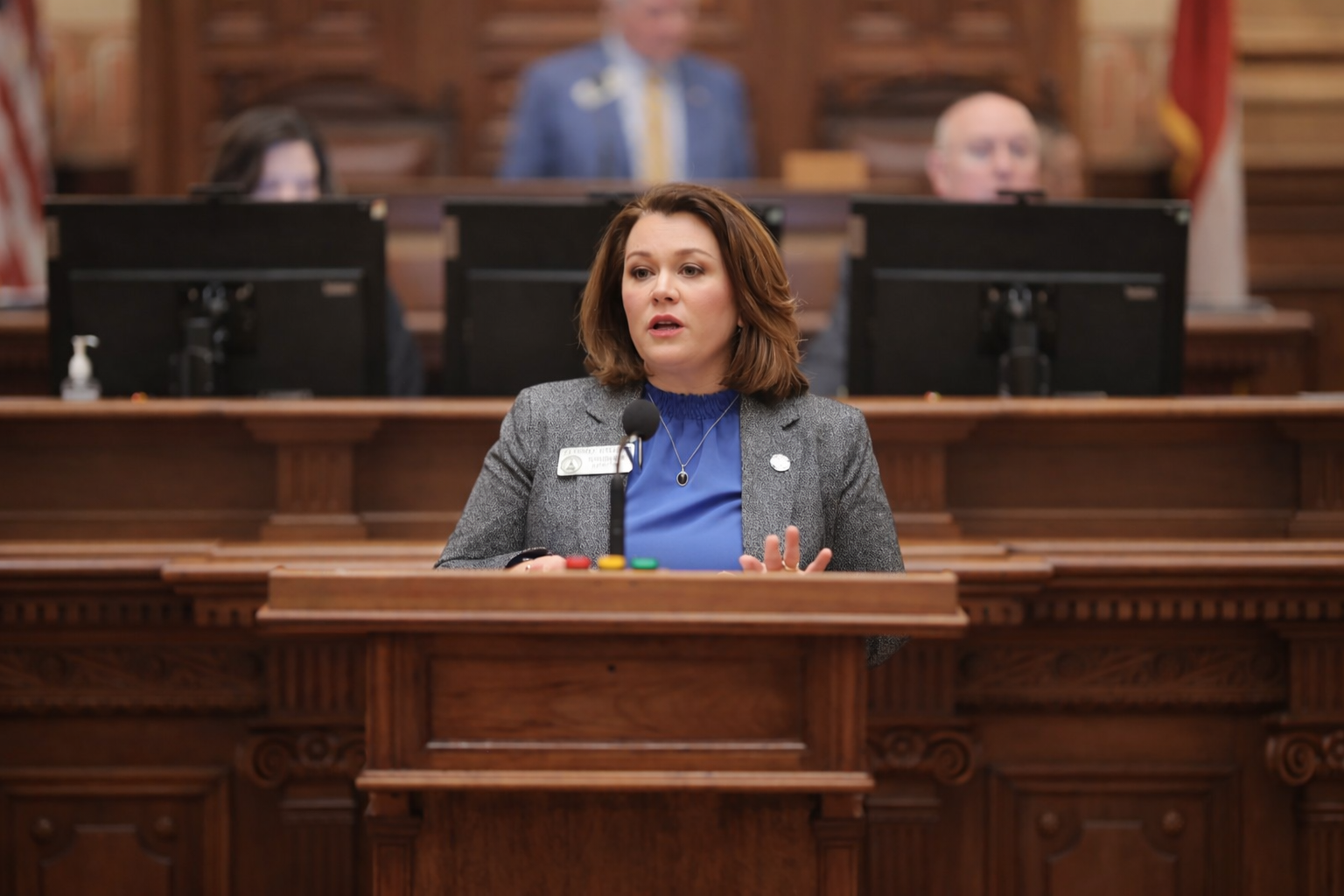
EDUCATION UPDATEFOCUSING ON LITERACY On Tuesday, our work centered on strengthening our state’s education system and supporting Georgia’s students and teachers, with several key education measures taking priority. Among them was a House priority for this session—House Bill 1193, the Georgia Early Literacy Act of 2026—which passed the House overwhelmingly with bipartisan support. HB 1193 would promote and advance comprehensive early literacy and reading education efforts across grades K-3. Specifically, the legislation would provide Quality Basic Education (QBE) funding for school-based literacy coaches in all Georgia public schools that serve students in kindergarten through third grade—impacting more than 1,000 schools statewide. School-based literacy coaches would be certified teachers or professionals holding a literacy coaching endorsement from the Georgia Professional Standards Commission. In addition to school-based coaches, the bill would fund regional literacy coaches and leadership literacy coaches within Georgia’s 16 Regional Education Service Agencies (RESAs). The Georgia House recognizes that reading proficiency is foundational to success across all academic subjects and is a key determinant of students’ future academic and professional achievements. The Georgia Early Literacy Act would make substantial strides toward ensuring that Georgia’s students are equipped for lifelong success. The House also passed House Bill 372, which would extend the sunset for retired educators to return to work from June 30, 2026, to June 30, 2030, and would require educators who return to work in literacy-related subjects to hold a current dyslexia or reading endorsement approved by the Professional Standards Commission. I'm proud to have sponsored this legislation to help our schools fill gaps and find qualified teachers to meet the needs of our students. |
|
|
|
|
SPONSORED LEGISLATIONBecause the Georgia General Assembly operates on a two year cycle, bills introduced last year are still "alive" during this second year of the biennium. You can click on the red text of the bill number to read the text of each bill. HOUSE BILL 372 -- This bill will allow teachers who have attained 30 years of creditable service to return to the classroom after certain qualifications have been met. This will allow school districts to ensure that quality teachers are in our classrooms. This program is already in place in Georgia, but it ends this June. HB 372 will ensure this program continues. HB 372 PASSED THE HOUSE last week unanimously. HOUSE BILL 487 --This bill will require that computer science become a graduation requirement beginning in 2031. At the end of last session this bill was merged with SB 179 sponsored by Senator Clint Dixon, and is now listed under that bill number. It passed the House last year, and is now waiting for the Senate to agree to an amendment. HOUSE BILL 1181 -- This bill will cut red tape in the titling process when a family member inherits an an automobile. HB 1181 PASSED THE HOUSE, and it has been put into the Senate Public Safety Committee HOUSE BILL 1220 -- This bill allows military students and students with IEPs, 504 plans, and other disabilities to waive some requirements for student scholarship organizations. This bill passed the House Education Committee, and I look forward to it being heard on the House floor before the Crossover Day deadline. HOUSE BILL 1325 -- This bill would require local boards of education to provide both parents and teachers opportunities to be involved in developing and updating student codes of conduct. HOUSE BILL 1429 -- This bill would require juvenile court judges to collect and report data on monetary sanctions assessed to juvenile offenders. This bill will be heard in the Judiciary Juvenile Committee on Monday. |
|
|
|
|
HOUSE PAGE PROGRAMIf your child is between the ages of 12 and 18 and would like to come participate in a House floor session, I would love to have them work with me one day as a House Page. They will see the inner workings of our governmental process, meet students from across the state, participate in a tour of the Capitol, and have fun! Their day at the Capitol will not be counted as a school absence. Please reach out to my administrative assistant at the link below to arrange this special day for your child. I can't wait to meet them! |
|
|
|
|
|
|
LINKS AND INFORMATIONYou can click the link below for our website and watch all our floor session days and committee meetings on livestream. If you want to catch up with previous years, all the meetings and floor sessions can be found in our archives. I look forward to continuing to represent your families, and I encourage you to contact me if you need assistance. |
|
|
|
|
|
|
|
|
|
|